
Medically reviewed and updated for accuracy by Dr Meg Minasian, MBBS, FRCOphth. (Last reviewed: May 2026)
Dry eye is a complex condition involving instability of the tear film and irritation of the ocular surface.
Symptoms may include:
- burning
- grittiness
- fluctuating vision
- watering
- irritation
- light sensitivity
- and ocular discomfort.
Because blinking and eyelid movement play important roles in maintaining the ocular surface, discussion has increasingly focused on the relationship between botulinum toxin treatment and dry eye symptoms.
This relationship is complex and varies considerably between individuals.
What Is Dry Eye?
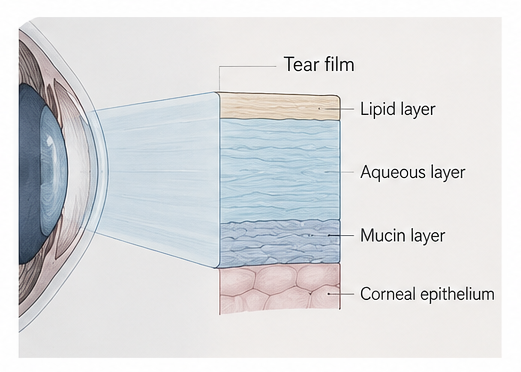
Dry eye occurs when the surface of the eye is not adequately lubricated or protected by the tear film.
The condition may involve:
- reduced tear production
- excessive tear evaporation
- blinking abnormalities
- inflammation
- eyelid dysfunction
- or ocular surface instability.
Multiple biological systems contribute to tear film health.
Why Is Blinking Important?
Blinking helps:
- distribute tears across the eye surface
- maintain tear film stability
- protect the cornea
- remove debris
- and support visual comfort.
Normal blinking depends on careful coordination between:
- eyelid muscles
- nerves
- tear film dynamics
- and ocular surface function.
Even subtle changes in blinking patterns may influence eye comfort.
How Can BTX Influence Dry Eye Symptoms?
Botulinum toxin works by temporarily reducing signalling between nerves and muscles.
When injected around the periocular region, BTX may influence:
- blinking strength
- eyelid closure
- muscle balance
- and tear film distribution.
In some individuals, these changes may potentially contribute to:
- increased tear evaporation
- ocular surface exposure
- or worsening dry eye symptoms.
In other situations, effects may differ depending on anatomy and muscle dynamics.
The Importance of The Periocular Region
The muscles around the eyes are highly specialised and closely interconnected.
These tissues contribute to:
- blinking
- eyelid closure
- brow balance
- tear film stability
- and eye protection.
Because of this functional complexity, periocular treatment planning requires careful anatomical understanding.
Dry Eye and Aesthetic BTX Treatment
In aesthetic medicine, BTX is commonly used around:
- the forehead
- crow’s feet region
- and periocular muscles.
Changes in muscle activity around the eyes may influence:
- blink dynamics
- eyelid closure
- tear evaporation
- and ocular comfort in selected individuals.
This does not mean that all periocular BTX treatment causes dry eye, but ocular surface health remains an important consideration.
Why Individual Factors Matter
The relationship between BTX and dry eye depends on multiple factors including:
- baseline ocular surface health
- age
- anatomy
- blinking patterns
- eyelid position
- treatment location
- dose
- and existing dry eye disease.
Individual variation is considerable.
Medical Uses Around The Eyes
Botulinum toxin is also used medically in conditions affecting blinking and periocular muscle activity, including:
- blepharospasm
- hemifacial spasm
- facial synkinesis
- and other neurological movement disorders.
In these situations, treatment planning may involve balancing:
- symptom control
- blinking function
- eye protection
- and ocular comfort.
Why This Topic Matters
Public discussion surrounding BTX often focuses mainly on visible cosmetic effects while underestimating the importance of ocular function.
Dry eye illustrates how periocular BTX treatment may influence:
- anatomy
- blinking
- tear film dynamics
- neurological control
- and ocular surface health simultaneously.
Understanding these relationships is important in both ophthalmology and aesthetic medicine.
Frequently Asked Questions
What is dry eye?
Dry eye is a condition involving instability of the tear film and irritation of the ocular surface.
Can BTX affect blinking?
Yes. BTX may influence blinking dynamics and eyelid movement in some situations.
Can blinking changes influence dry eye symptoms?
Yes. Blinking plays an important role in tear film stability and ocular surface protection.
Does periocular BTX always cause dry eye?
No. Effects vary considerably depending on anatomy, treatment approach and baseline eye health.
Why is the eye region anatomically complex?
The periocular region contains highly specialised muscles involved in blinking, tear film maintenance and eye protection.
Related Articles
- BTX and Blinking Explained
- BTX Around The Eyes Explained
- BTX and Facial Anatomy Explained
- Eyelid Ptosis After BTX
- BTX for Blepharospasm
Medical Disclaimer
The information provided on BTXExpert is intended for educational purposes only and should not be considered medical advice. Individuals should seek personalised advice from an appropriately qualified healthcare professional regarding diagnosis, treatment suitability, risks and alternatives.