
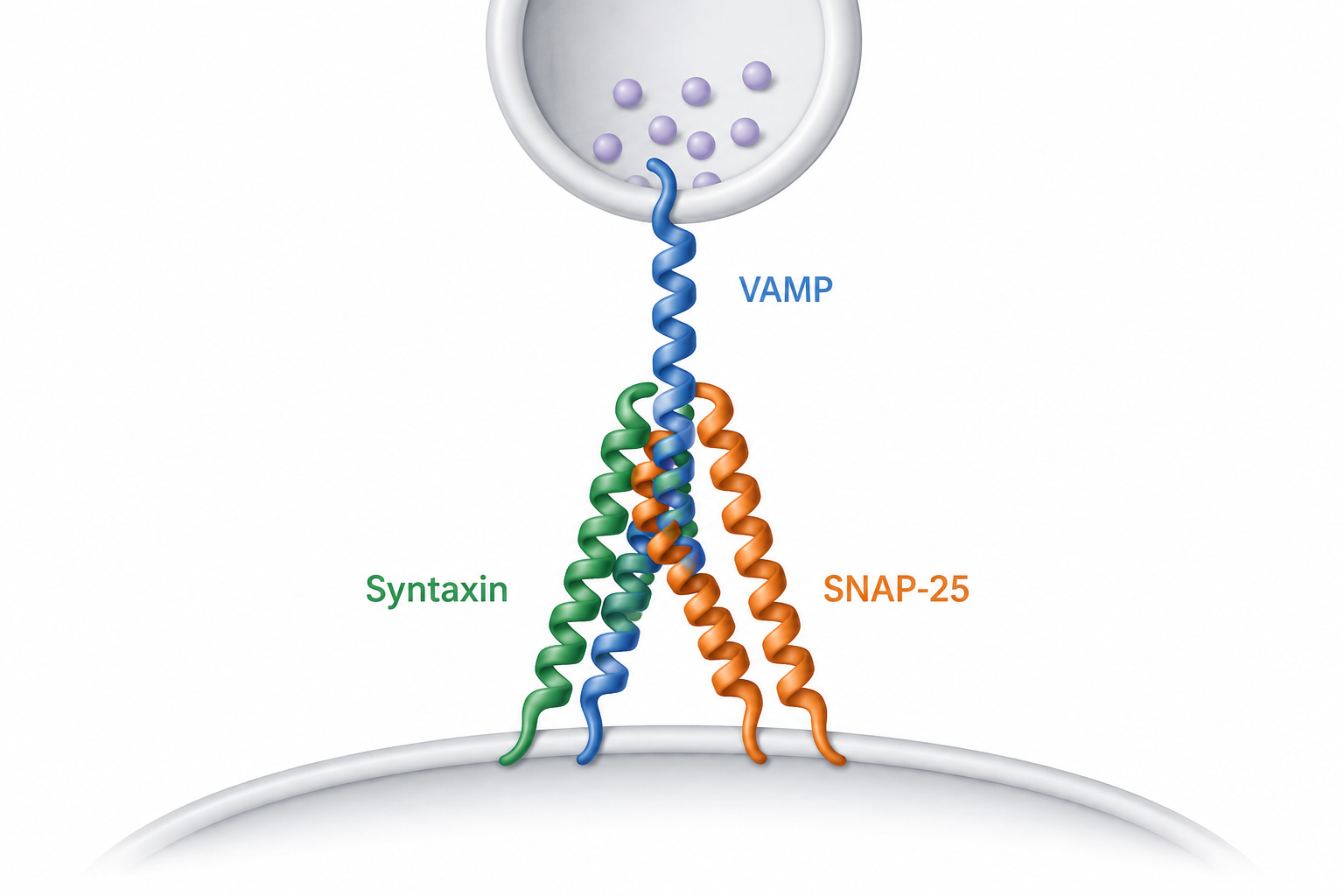
SNARE proteins play an important role in nerve signalling and are central to understanding how botulinum toxin works.
Although the term may sound highly technical, SNARE proteins are essentially part of the cellular machinery that allows nerve cells to communicate with other cells, including muscles.
Botulinum toxin affects this communication system by interfering with specific SNARE proteins involved in neurotransmitter release.
The term “SNARE” refers to “Soluble N-ethylmaleimide-sensitive factor Attachment protein REceptor”, a group of proteins involved in vesicle fusion and neurotransmitter release within cells.
What Do SNARE Proteins Do?
Nerve cells communicate using chemical messengers known as neurotransmitters.
Before a neurotransmitter can be released, tiny membrane-bound structures called vesicles must fuse with the nerve terminal membrane.
SNARE proteins help control this fusion process.
Without properly functioning SNARE proteins, neurotransmitters such as acetylcholine cannot be released efficiently.
Acetylcholine and Muscle Contraction
Acetylcholine is one of the main neurotransmitters involved in muscle contraction.
Under normal conditions:
- nerves release acetylcholine
- acetylcholine binds to muscle receptors
- muscles receive the signal to contract
SNARE proteins are essential to this release mechanism.
How Does BTX Affect SNARE Proteins?
Botulinum toxin interferes with neurotransmitter release by targeting components of the SNARE protein complex.
Botulinum toxin type A, the form most commonly used in medicine and aesthetics, primarily affects a SNARE protein called SNAP-25.
When SNAP-25 is disrupted:
- acetylcholine release is reduced
- nerve signalling decreases
- muscle activity becomes temporarily weakened
This mechanism forms the basis of both therapeutic and aesthetic BTX treatment.
Different Botulinum Toxin Types
Different botulinum toxin serotypes target different SNARE proteins.
For example:
- botulinum toxin type A primarily affects SNAP-25
- botulinum toxin type B primarily affects synaptobrevin
These differences contribute to ongoing scientific research into:
- toxin behaviour
- clinical effects
- duration
- resistance
- future therapeutic applications
Why Are SNARE Proteins Important?
Understanding SNARE proteins helps explain:
- how BTX works
- why muscle activity changes
- why effects are temporary
- how different toxins behave
- why side effects may occur
The SNARE system is also important more broadly within neuroscience and cellular biology.
Why The Effects Are Temporary
Botulinum toxin does not permanently destroy nerves.
Over time:
- affected nerve endings recover
- new nerve terminals may develop
- neurotransmitter release gradually resumes
As SNARE protein function returns, muscle activity slowly increases again.
Ongoing Research
Research involving SNARE proteins and botulinum toxin continues in areas including:
- pain signalling
- neurological disease
- inflammatory pathways
- autonomic nervous system function
- novel toxin development
- drug delivery systems
The interaction between BTX and SNARE proteins remains an important area of modern neuroscience research.
Frequently Asked Questions
What are SNARE proteins?
SNARE proteins help nerve cells release neurotransmitters efficiently.
Why are SNARE proteins important in BTX treatment?
Botulinum toxin works by interfering with SNARE proteins involved in acetylcholine release.
What is SNAP-25?
SNAP-25 is a SNARE protein targeted primarily by botulinum toxin type A.
Do SNARE proteins recover after BTX treatment?
Yes. Over time, nerve signalling gradually recovers as nerve terminals repair and regenerate function.
Are SNARE proteins only relevant to BTX?
No. SNARE proteins are important throughout the nervous system and broader cellular biology.
Medical Disclaimer
The information provided on BTXExpert is intended for educational purposes only and should not be considered medical advice. Individuals should seek personalised advice from an appropriately qualified healthcare professional regarding diagnosis, treatment suitability, risks and alternatives.