
Medically reviewed and updated for accuracy by Dr Meg Minasian, FRCOphth. (Last reviewed: May 2026)
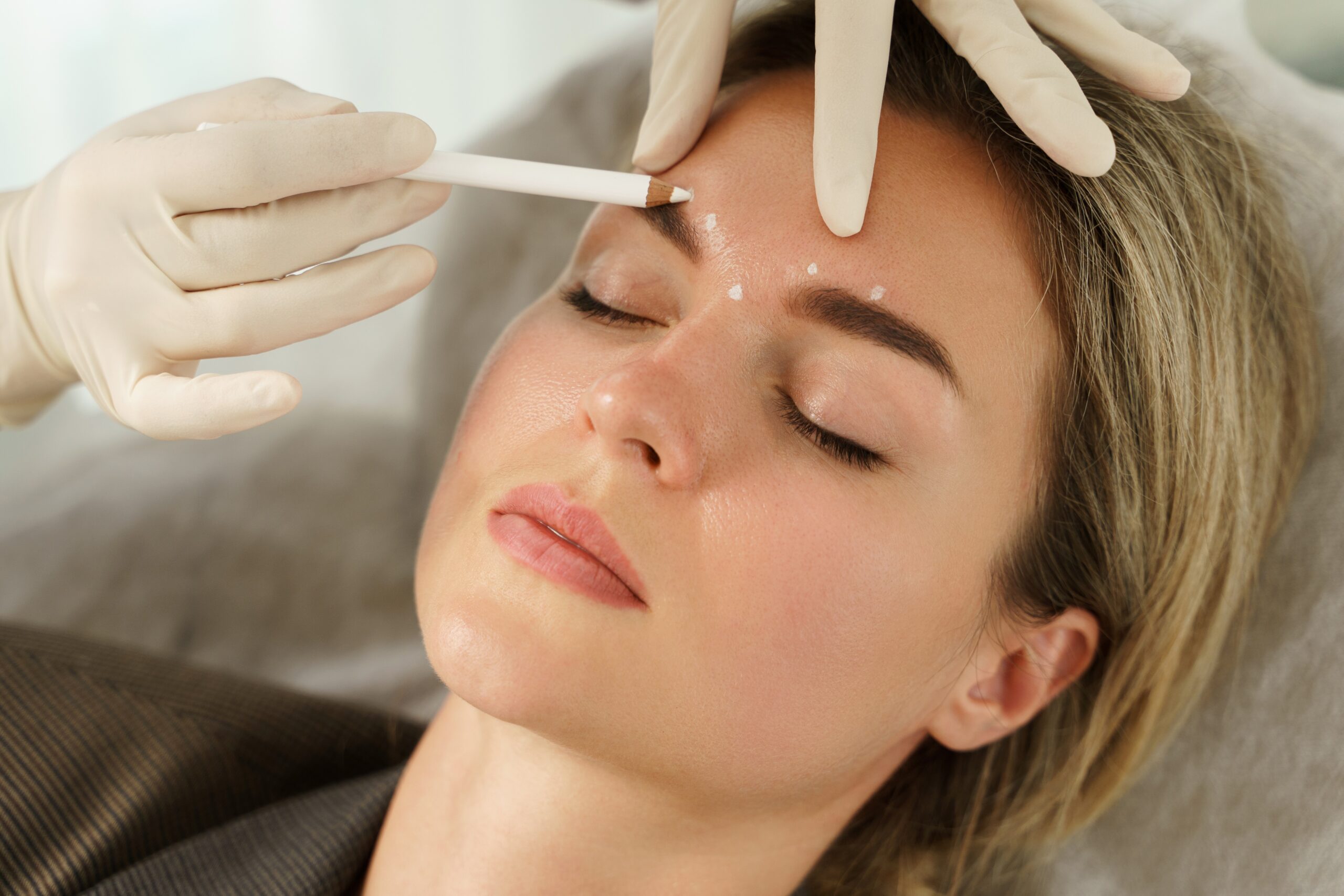
Botulinum toxin is commonly used in aesthetic medicine to reduce the appearance of dynamic forehead lines.
These lines typically develop over time through repeated movement of the frontalis muscle, the main muscle responsible for lifting the eyebrows and creating horizontal forehead expression lines.
BTX treatment aims to reduce muscle activity in selected areas while maintaining natural facial movement and expression.
What Causes Forehead Lines?
Forehead lines are influenced by multiple factors, including:
- repeated facial movement
- muscle activity
- skin quality
- ageing
- sun exposure
- genetics
- skin hydration
- collagen changes over time
Dynamic lines may initially appear only during facial movement, but can gradually become visible at rest.
How Does BTX Work in the Forehead?
Botulinum toxin temporarily reduces signalling between nerves and muscles.
In forehead treatment, carefully placed injections reduce activity within portions of the frontalis muscle. This may soften horizontal forehead lines and reduce repetitive muscle contraction.
The aim is usually not complete immobility, but controlled modulation of muscle activity.
Treatment planning varies significantly between individuals.
Why Forehead Treatment Requires Careful Assessment
The forehead is closely linked to eyebrow position, eyelid support and overall facial balance.
Excessive weakening of the frontalis muscle may contribute to:
- eyebrow heaviness
- asymmetry
- altered facial expression
- difficulty lifting the brows
- compensatory muscle activity
Assessment of facial anatomy and natural movement patterns is therefore important before treatment.
Natural Movement and Modern Treatment Approaches
Modern aesthetic approaches often aim to:
- preserve natural expression
- avoid an overtreated appearance
- maintain balanced movement
- reduce excessive muscle contraction without eliminating normal function
Treatment goals vary considerably between individuals.
How Long Does BTX for Forehead Lines Last?
Effects are temporary.
Many patients notice gradual onset over several days, with effects commonly lasting around 3–4 months. Duration varies depending on:
- muscle strength
- metabolism
- dosing
- treatment history
- individual biological factors
Muscle activity gradually returns over time as nerve signalling recovers.
Potential Side Effects
Potential side effects may include:
- bruising
- swelling
- temporary asymmetry
- headache
- eyebrow heaviness
- eyelid droop (ptosis)
- altered facial expression
Most effects are temporary.
Careful treatment planning and anatomical understanding are important in reducing risk.
Forehead Anatomy and Ongoing Research
Forehead treatment continues to evolve alongside:
- anatomical research
- injection technique development
- understanding of facial dynamics
- regenerative aesthetic approaches
- natural movement preservation strategies
There is increasing emphasis on individualised treatment rather than fixed injection patterns alone.
Frequently Asked Questions
Does BTX completely freeze the forehead?
Not necessarily. Many modern approaches aim to soften movement while preserving natural expression.
How long does treatment last?
Effects commonly last around 3–4 months, although this varies.
Can forehead treatment affect eyebrow position?
Yes. Forehead treatment may influence brow position and facial balance.
Is forehead treatment the same for everyone?
No. Treatment planning varies depending on anatomy, muscle activity and aesthetic goals.
Can forehead BTX look natural?
Yes. Treatment approaches often aim to maintain balanced and natural facial movement.
Back to top ↑Medical Disclaimer
The information provided on BTXExpert is intended for educational purposes only and should not be considered medical advice. Individuals should seek personalised advice from an appropriately qualified healthcare professional regarding diagnosis, treatment suitability, risks and alternatives.