
Medically reviewed and updated for accuracy by Dr Meg Minasian, MBBS, FRCOphth. (Last reviewed: May 2026)
Strabismus is a condition involving misalignment of the eyes due to imbalance in the muscles controlling eye movement.
The condition may affect:
- binocular vision
- depth perception
- eye coordination
- visual comfort
- and eye position.
Botulinum toxin has been used in selected cases of strabismus for several decades and played an important historical role in the early development of therapeutic BTX treatment.
What Is Strabismus?
Strabismus occurs when the eyes do not align in the same direction simultaneously.
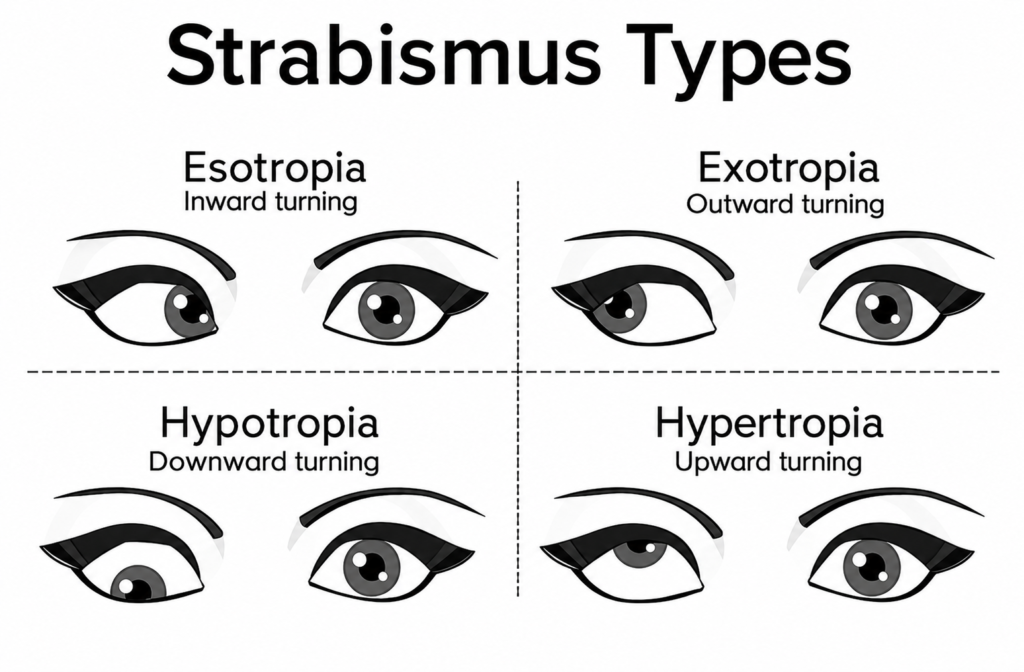
One eye may turn:
- inward (esotropia)
- outward (exotropia)
- upward (hypertropia)
- downward (hypotropia)
relative to the other eye.
The condition may be constant or intermittent and can occur in both children and adults.
How Do Eye Muscles Normally Work?
Eye position is controlled by six extraocular muscles attached to each eye.
These muscles must work in highly coordinated balance to allow:
- binocular alignment
- smooth eye movement
- stable vision
- and coordinated gaze.
Small changes in muscular balance may influence eye position and visual function.
How Can BTX Affect Eye Alignment?
Botulinum toxin works by temporarily reducing signalling between nerves and muscles.
When injected into selected extraocular muscles, BTX may temporarily weaken overactive muscles contributing to abnormal eye positioning.
Potential treatment goals may include:
- improving eye alignment
- reducing abnormal muscle pull
- improving binocular coordination
- and supporting functional visual balance.
Treatment planning depends on the specific type of strabismus and individual anatomy.
Historical Importance of Strabismus Treatment
The use of botulinum toxin in strabismus played a major role in the early development of therapeutic BTX medicine.
Ophthalmologist Dr Alan Scott was instrumental in pioneering early therapeutic botulinum toxin research involving eye muscle disorders.
This work later contributed to the broader development of modern medical and aesthetic BTX applications.
Is BTX Used Instead of Strabismus Surgery?
Management approaches vary considerably depending on:
- the type of strabismus
- age
- muscle involvement
- visual function
- neurological factors
- clinical goals.
BTX may be used:
- alone in selected cases
- alongside other treatments
- or as part of broader strabismus management strategies.
Treatment decisions are highly individualised.
Potential Side Effects
Potential side effects may include:
- temporary double vision
- eyelid ptosis
- overcorrection or undercorrection
- temporary visual imbalance
- bruising
- altered eye movement.
Most effects are temporary, although outcomes vary.
Why Extraocular Muscle Anatomy Matters
The muscles controlling eye movement are highly specialised and require extremely precise coordination.
Small changes in:
- muscle strength
- muscle balance
- ocular alignment
may significantly influence:
- binocular vision
- visual comfort
- aeye movement function.
Careful anatomical and ophthalmic assessment remains important in treatment planning.
Ongoing Research and Clinical Discussion
Research involving BTX and strabismus continues in areas including:
- extraocular muscle physiology
- binocular vision
- injection techniques
- paediatric applications
- neurological eye movement disorders
- long-term alignment outcomes.
Strabismus remains an important area within ophthalmology and neuro-ophthalmology.
Why This Topic Matters
Strabismus highlights the important ophthalmological origins of therapeutic botulinum toxin treatment.
Understanding the historical and functional role of BTX in eye movement disorders helps place modern aesthetic toxin use within a much broader medical context.
Frequently Asked Questions
What is strabismus?
Strabismus is a condition involving misalignment of the eyes caused by imbalance in eye muscle control.
Can BTX influence eye muscle movement?
BTX may temporarily weaken selected extraocular muscles in certain clinical situations.
Is BTX historically important in ophthalmology?
Yes. Early therapeutic BTX research in ophthalmology helped shape the development of modern botulinum toxin medicine.
Is treatment permanent?
No. BTX effects are temporary.
Is strabismus only treated with BTX?
No. Management may involve multiple treatment approaches depending on the individual condition.
Back to top ↑Medical Disclaimer
The information provided on BTXExpert is intended for educational purposes only and should not be considered medical advice. Individuals should seek personalised advice from an appropriately qualified healthcare professional regarding diagnosis, treatment suitability, risks and alternatives.